About Avishkaran Insights
Avishkaran Insights is an open-access science communication platform created to explain scientific ideas and discoveries in a way that young readers can easily understand. The platform provides a space where scientists, educators, and students can work together to share scientific knowledge in a clear and engaging manner. Many scientific discoveries are often explained in complex language that can be difficult for young learners to understand. Avishkaran Insights aims to bridge this gap by encouraging scientists to present their research in simple and accessible language. By doing so, the platform helps students learn about modern scientific discoveries and understand how science influences our daily lives. Another important goal of Avishkaran Insights is to encourage curiosity and creativity among young readers. Science is not only about facts and experiments; it is also about asking questions, exploring ideas, and discovering new possibilities. Through this platform, young readers can explore exciting scientific topics and develop a deeper interest in learning. Avishkaran Insights also promotes interaction between scientists and students. One of the unique aspects of the platform is that young readers can participate as reviewers, helping authors ensure that their articles are clear and understandable. This collaborative approach makes the learning process more interactive and engaging.
Our Mission
Avishkaran Insights is dedicated to inspiring curiosity, creativity, and scientific thinking among young minds by making high-quality research accessible, engaging, and understandable. Our mission is to bridge the gap between scientists and young minds by transforming complex scientific discoveries into clear, age-appropriate articles that spark imagination and encourage lifelong learning. Inspired by the belief that every child has the potential to become an innovator, explorer, and problem-solver, Avishkaran Insights provides a unique platform where researchers, educators, and young reviewers collaborate to communicate science in a simple and meaningful way. We aim to empower young minds not only as readers but also as active participants in the scientific process by involving them in reviewing and shaping content designed especially for their age group. At Avishkaran Insights, we envision a future where knowledge is shared without barriers, curiosity is celebrated, and young minds are inspired to ask questions that shape a better world. Our mission is to make science not only informative, but exciting, relatable, and empowering for the next generation.
Target Audience
Avishkaran Insights publishes articles mainly for students between the ages of 8 and 19 years. These readers may include school students who are curious about science and want to learn more about how the world works. The articles are also useful for teachers, parents, and educators who want to explain scientific ideas to young learners. Because the audience includes students with different levels of knowledge, the articles must be written in simple language that is easy to read and understand. Authors should always keep young readers in mind when writing their articles. Complex terminology should be avoided whenever possible, and difficult concepts should be explained using simple examples and clear explanations.
Scope of the Platform
Avishkaran Insights welcomes articles from a wide range of scientific disciplines. The platform aims to provide young readers with a broad understanding of science and technology. Topics may include biology, medicine, chemistry, physics, environmental science, artificial intelligence, robotics, engineering, space science, and earth science. Authors may also discuss scientific topics that affect society such as climate change, renewable energy, public health, and technological innovation. The goal is to show young readers that science is connected to many aspects of everyday life. By exploring different scientific fields, students can learn how scientific knowledge helps solve problems, improve health, protect the environment, and develop new technologies.
Who Can Submit Articles
Articles may be submitted by researchers, professors, graduate students, industry scientists, science communicators, and educators. Individuals with experience or knowledge in a scientific field are encouraged to share their expertise. To ensure scientific accuracy, it is recommended that at least one author has a research background related to the topic. This helps maintain reliability and credibility. Authors should not only present facts but also inspire curiosity. Articles should encourage young readers to ask questions and explore ideas.
Writing Style and Language
The writing style should be simple, clear, and engaging. Authors should use plain English so young readers can easily understand. Long and complicated sentences should be avoided. If scientific terms are used, they should be clearly explained. Authors are encouraged to use examples, comparisons, and storytelling to explain ideas. A friendly tone makes science enjoyable rather than difficult.
Young Reviewer Program
Students aged 8 to 19 can participate as young reviewers. They read articles and provide feedback on clarity and engagement. This ensures the content truly meets the needs of young readers and improves overall quality.
Avishkaran Guru
Avishkaran Guru guide young reviewers. They may be teachers, researchers, or science communicators. Mentors help reviewers understand topics and provide meaningful feedback while developing their scientific thinking.
Ethical Standards
Authors must ensure originality and accuracy. Plagiarism is not allowed. Proper credit must be given for images or external content, and conflicts of interest must be disclosed.
Open Access Policy
All articles are freely accessible. Readers can read and share content without cost. This supports the goal of making scientific knowledge available to everyone.
Editors from our board

R Hemalatha, Ph.D
GM, Medical & Health Research & Development, Yashoda Hospitals | Former Director, ICMR–NIN | Advisor, PAN India.

Yogeeswari Perumal, Ph.D
Dean-Administration, Birla Institute of Technology and Science, Pilani, Hyderabad, Telangana
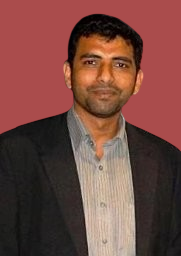
Chandraiah Godugu, Ph.D
Associate Professor, National Institute of Pharmaceutical Education and Research (NIPER) Hyderabad , Telangana

Saikishore V
COO, Avishkaran, BioNest of NIPER, Hyderabad, Telangana

Md. Rizwanullah, Ph.D
Kognovate Education and Research, Bionest, Avishkaran (NIPER), Hyderabad, India

Anil Kumar Kalvala, Ph.D
Postdoctoral Research Associate, Texas Tech University Health Sciences Center, Abilene, Texas, USA
How does it work?
Article Submission
Scientists, researchers, educators, and science communicators are invited to contribute a key idea or discovery based on their expertise. Articles are written in a simple, engaging manner so that young readers can easily understand complex concepts.
Initial Editorial Screening
The editorial team reviews each submission to ensure it meets the journal’s standards of scientific accuracy, clarity, and suitability for young audiences.
Assignment to Avishkaran Gurus & Young Reviewers
3. Assignment to Avishkaran Gurus & Young Reviewers: The article is assigned to at least two Avishkaran Gurus. They, in turn, engage a young reviewer (student) who reads the article and shares feedback on clarity, understanding, and engagement.
Guru-Guided Review
Avishkaran Gurus guide and support the young reviewer throughout the process, helping them understand the content and provide meaningful, constructive feedback.
Author Revision
Based on feedback from both the young reviewer and gurus, the author revises the article to improve clarity, accuracy, and readability.
Final Editorial Decision
The editorial team evaluates the revised manuscript to ensure it meets all quality standards and is suitable for publication.
Publication & Learning
The final article is published as open-access content, making it freely accessible to young learners worldwide. Each article is designed as a multi-format learning experience, delivered through a clear written version, a concept-based video that simplifies key ideas, and an audio format that enables flexible, on-the-go learning.
Supporters and Partners

Global projects & Translating partners